Premium Shoe Insoles Premium Shoe Insoles Premium Shoe Insoles Premium Shoe Insoles Premium Shoe Insoles Premium Shoe Insoles

Premium Insoles for Your Hard-Working Feet

Try the RxSorbo Sorbothane difference and give your
feet that extra comfort.

Start Shopping

Welcome to RXSorbo

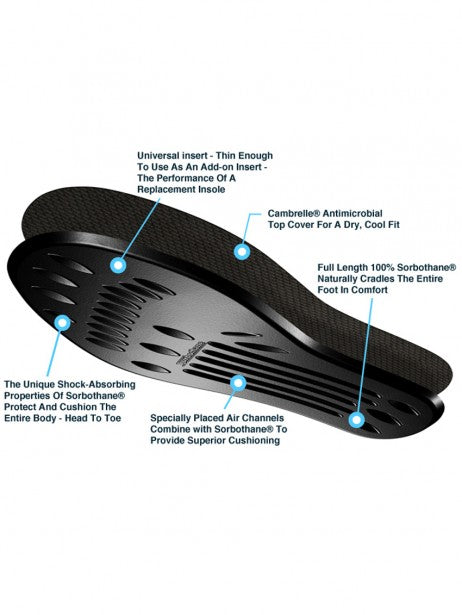
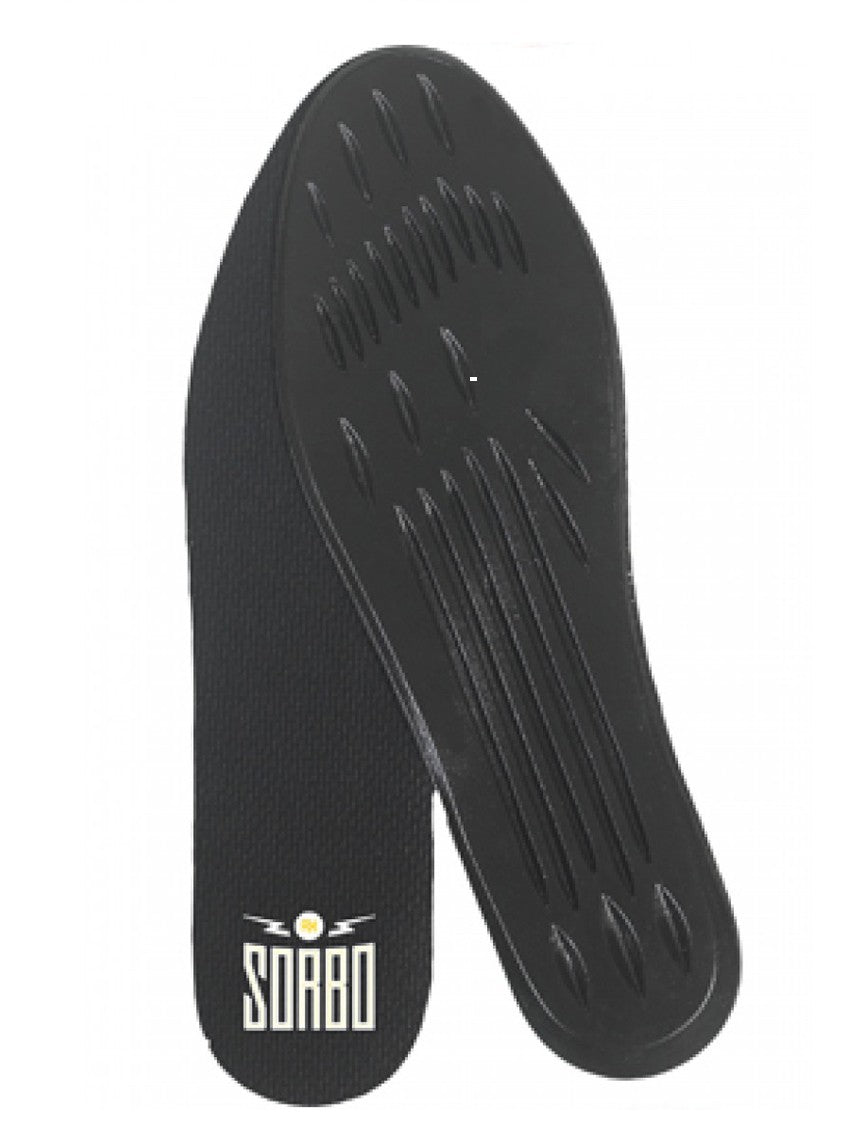
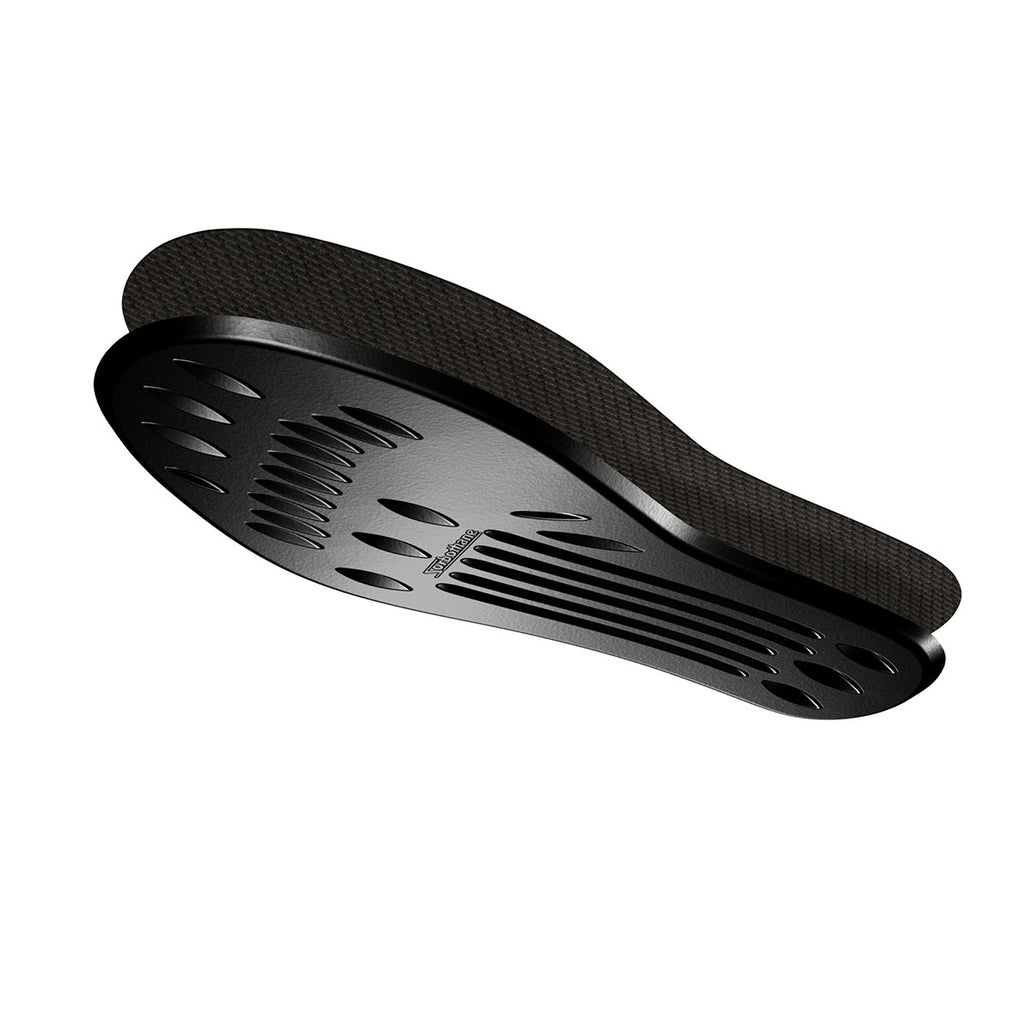
RxSorbo Sorbothane® insoles absorb shock and provide protection to your body with every step you take. RxSorbo® insoles are excellent for everyone who walks, works, plays sports or spends long hours on their feet. Sorbothane® insoles have been proven to dramatically help individuals experiencing foot discomfort caused by medical conditions such as shin splits, heel spurs and ulcerations caused by diabetes.

Start Shopping

Why RX Sorbo®

RX Sorbo® insoles absorb shock and provide protection to your body with every step you take. RX Sorbo® insoles are excellent for everyone who walks, works, plays sports or spends long hours on their feet. RX Sorbo® insoles have been proven to dramatically help individuals experiencing foot discomfort caused by medical conditions such as shin splits, heel spurs and ulcerations caused by diabetes. RX Sorbo® insoles are widely recommended by doctors and sports medicine specialists to provide maximum comfort and protection. Sorbothane® absorbs up to 94.7% of impact shock!

Sorbothane insoles can help prevent and relieve:

  • Arch Pain
  • Back Pain
  • Heel Pain
  • Knee Pain
  • Shin Splints
  • The list goes on & on!!

What is Sorbothane®?

Sorbothane®, a one-of-a-kind visco-elastic polymer, was first introduced in 1982. Primary applications included the development of shock absorbing insoles for the athletic and orthopedic markets. Since its introduction Sorbothane® has been used in many varied energy absorbing product categories. Sorbothane® Inc. engineers supplied the NASA design team with a unique Sorbothane® isolator to protect shuttle cameras during launch. The Liberty Bell was successfully moved using specially designed Sorbothane® isolators. When Wilson® Sporting Goods needed a superior shock absorber for their new line of high-tech baseball gloves, they turned to Sorbothane®. Most recently, engineers have devised a series of colossal "ball-in-box" Sorbothane® dampers designed to dissipate wind energy in the new Air Force memorial.

So do they work?

Dear RX Sorbo®,

I am a Police Officer in the Tactical Firearms Unit in the Greater Manchester Police, England and am writing to you with regards to a pair of Sorbothane® insoles I purchased for my boots.

We are all issued Men's Danner Acadia Plain Toe Uniform Boots and despite them being very suitable to our role I found them somewhat hard on the feet while on foot patrol. However, I have since purchased a pair or your “RX Sorbo® Insoles” and my boots now feel like a pair of slippers!!

It's like wearing a pair of trainers and they are now very comfy! Keep up the good work!

Thanks,

J.N.
Officer
Tactical Firearms Unit,

Start Shopping
Start Shopping

75% of Americans will experience foot problems at some time in their lives.

— so trust only the best insoles RX Sorbo

Women are four times more likely to experience foot problems than men.

— so trust only the best insoles RX Sorbo®

Your feet represent almost 25% of the bones in your body.

— so trust only the best insoles RX Sorbo®

The average person walks about 10,000 steps a day.

— so trust only the best insoles RX Sorbo®

Heel pain affects two million Americans every year.

— so trust only the best insoles RX Sorbo®

Recent surveys show that heel pain affect 40% of Americans.

— so trust only the best insoles RX Sorbo®

Start Shopping

"75% of Americans will experience foot problems at some time in their lives"

A variety of sources seem to be speaking this common theme about Americans and foot problems. A.L. Shaffer published that "three out of four Americans will suffer from foot pain."(1) It makes sense that the percentage is so high since many people deal with heel pain, plantar fascia pain, and numbness or tingling. Other foot problems may include hammer toes, bunions, and ingrown nails. Because we place such a high demand on our feet, and they are often abused, many people will experience foot problems. The foot contains the following: 26 bones, 33 joints, 107 ligaments, 19 muscles, and tendons.(2) The complexity of the foot makes it prone to injury and leaves a lot of potential for suffering, pain, and disease. It is important to always have the proper foot wear, but it doesn’t stop there you have to have the proper shoe insoles as well, please view our entire RXSorbo line to discover which insole is the best for you.

"Your feet absorb roughly 300 tons of force during a 3 mile run"

Your feet absorb an incredible amount of impact - the equivalent of tons with every mile that is run, and the equivalent of several pounds with every step that is taken. Some have compared the weight to that of a cement truck, and others use shear numbers to drive the point home. The exact shock absorbed will vary greatly on the person's weight, running surface, foot wear and even running mechanics. For those who like exact numbers, the American Podiatric Association's research notes that "150-pound person walking just one mile exerts a force of 63.5 tons on a single foot."(3) Additionally, two researchers have published that an average marathon runner takes 38,000 steps and "each step loads the lower extremity with 4 to 8 times body weight. If we use these figures to extrapolate loading over the marathon distance, the lower extremity joints absorb forces in excess of 5,000 tons."(4) The verdict is that the feet absorb tons of during our daily activities, and knowing this you should give your feet a break and try out a pair of RXSorbo® shoe insoles, to help absorb some of that force.

"Women are four times more likely to experience foot problems than men. "

In a study looking at the effects of standing on pain, researchers noted that women had higher incidents of pain in their feet and lower leg than men.(5) Another study (not specifically comparing men vs. women in regards to their foot problems) found that "eighty-seven percent of the sample had at least one foot problem. Women had a significantly higher foot problem score than did men." (6) Podiatrist note that ill fitting shoes are often the cause for foot problems, and untreated issues lead to the development of more problems. Many women wear heels which often stress the feet and therefore cause injury. Improper foot wear leads to bunions, calluses, nerve impingement in addition to heel pain. It seems that across all age groups, and ethnicities, women suffer from more foot problems than men.(7) So to help avoid some of these potential problems try on a pair of the RXSorbo metatarsal insole pads, or any of the other RXSorbo® insoles.

"Recent surveys show that heel pain affect 40% of Americans"

This is provided straight from the American Podiatric Council.(8) Their research leads the way with all foot related matters and they comment that we often spend a lot of time on our feet and that we wear improper footwear, and inadequate insoles or none at all. The American Academy of Orthopedic Surgeons also note a high prevalence of heel pain. They attribute the pain to, amongst other things, plantar fasciitis, heel bruises, or heel spurs.(9) Scott Wearing and his colleagues determined that when the fat pad loses its ability to disperse energy, heel pain ensued.(10) To help prevent heel pain try a pair of the "Sorbothane® SorboGel Heel pad" or the "Sorbothane® Ultra Heel Cup". Any RXSorbo® shoe insoles though have extra padding in the heel to help prevent heel pain so no matter what your choice you will notice a difference.

"The average person walks about 10,000 steps a day"

We are told to aim for 10,000 steps per day in order to maintain a minimum level of activity. Richard Bohannon found that his subjects took closer to 9,500 steps and as the population got older, they took fewer steps.(11) Other researchers have come to similar conclusions that people walk much less than 10,000 steps per day,(12) and perhaps that is one reason why we are seeing an increase in obesity rates and obesity related problems. By aiming to take 10,000 steps, a person can begin to make progress at some of these issues contributed by inactivity. "A sedentary person may only average 1,000 to 3,000 steps a day. For these people adding steps has many health benefits" notes one website.(13) Regardless of the number of steps taken, the body endures a lot of stress with every step, and care must be taken to avoid increasing activity too quickly. So strap up your shoes, toss in a pair of your favorite RXSorbo® shoe insoles and start getting out there. Please note that RXSorbo® insoles are great as running insoles and walking insoles.

"Only a small percentage of the population is born with foot problems."

Outside of genetic/congenital birth defects very few are born with foot problems. The problems that do exist are considered rare by most doctors, and most have good outcomes with early intervention. The website www.epodiatry.com notes that "Foot pain and symptoms in children is not common compared to adults due to the flexibility and resilience of the tissues."(14) Along the same line of thought are the authors from www.eorthopod.com who note that "with all of these foot problems, treatment is started early with gentle stretching, serial manipulation and casting, and sometimes surgery. For very mild problems, await-and-see approach may be all that's needed."(15) It seems that the foot problems that develop are self inflicted and many are preventable. We need to be aware of our shoes, insoles, walking surface, walking mechanics, and activity level in order to help avoid foot ailments. Try an insole with some arch support like the "Sorbothane® Ultra Orthotic Arch" or the "Sorbo® Orthotic Arch" both great insole with plenty of arch support.

Sources

  1. A.L. Shaffer. Foot faults: three out of four Americans will suffer from foot pain. Take steps to protect your peds. Tennis May 2000: Vol. 36 Issue 4. p. 80-82 3p.
  2. Van De Graaff, Kent. Human anatomy (6th edition). McGraw-Hill Publishers 2001.
  3. www.apma.org Tip sheet: Gearing Up for Walking Guide found 6.5.09
  4. Hohmann, Erik and Bryant, Adam. LONG DISTANCE RUNNING AND OSTEOARTHRITIS. SportEX Medicine Oct2006 Issue 30, p10 4p.
  5. Messing, Karen. Distal Lower-Extremity Pain and Work Postures in the Quebec Population. American Journal of Public HealthApr2008, Vol. 98 Issue 4, p705 9p.
  6. Menz, Hylton B. B Pod (Hons); Lord, Stephen R. PhD. The Contribution of Foot Problems to Mobility Impairment and Falls in Community-Dwelling Older People. Journal of the American Geriatrics Society. 49(12):1651-1656, December 2001.
  7. www.apma.org/MainMenu/News/Surveys/2009-Foot-Ailments-Survey.aspx - found 6.5.09
  8. www.apma.org/MainMenu/News/Surveys/2009-Foot-Ailments-Survey.aspx found 6.5.09
  9. http://orthoinfo.aaos.org/topic.cfm?topic=A00159 found 6.5.09
  10. Wearing, Scott C., et al. Bulk compressive properties of the heel fat pad during walking: A pilot investigation in plantar heel pain. Clinical Biomechanics May2009, Vol. 24 Issue 4, p397 6p.
  11. Richard Bohannon. Number of Pedometer-Assessed Steps Taken Per Day by Adults: A Descriptive Meta-Analysis. Physical Therapy Dec2007, Vol. 87 Issue 12, p1642 9p.
  12. Miller, Ruth and Brown, Wendy. Meeting Physical Activity Guidelines and Average Daily Steps in a Working Population. Journal of Physical Activity & Health Jul2004, Vol. 1 Issue 3, p218 9p.
  13. http://www.thewalkingsite.com/10000steps.html found 6.5.09
  14. http://www.epodiatry.com/children-foot-problem.htm found 6.5.09
  15. Orthopedic Problems in Babies From Birth to Three Months. http://www.eorthopod.com/found 6.5.09
Start Shopping